Financial messaging infrastructure with real production gravity.
jPOS is the Java-centric platform behind gateways, switches, acquirers, and issuers that need standards compliance, operational control, and room to build serious payment systems.
- ISO-8583, ISO-20022, EMV, and ANS X9.24 support
- Open-source core with enterprise extensions and support
- Purpose-built for high-integrity transaction processing
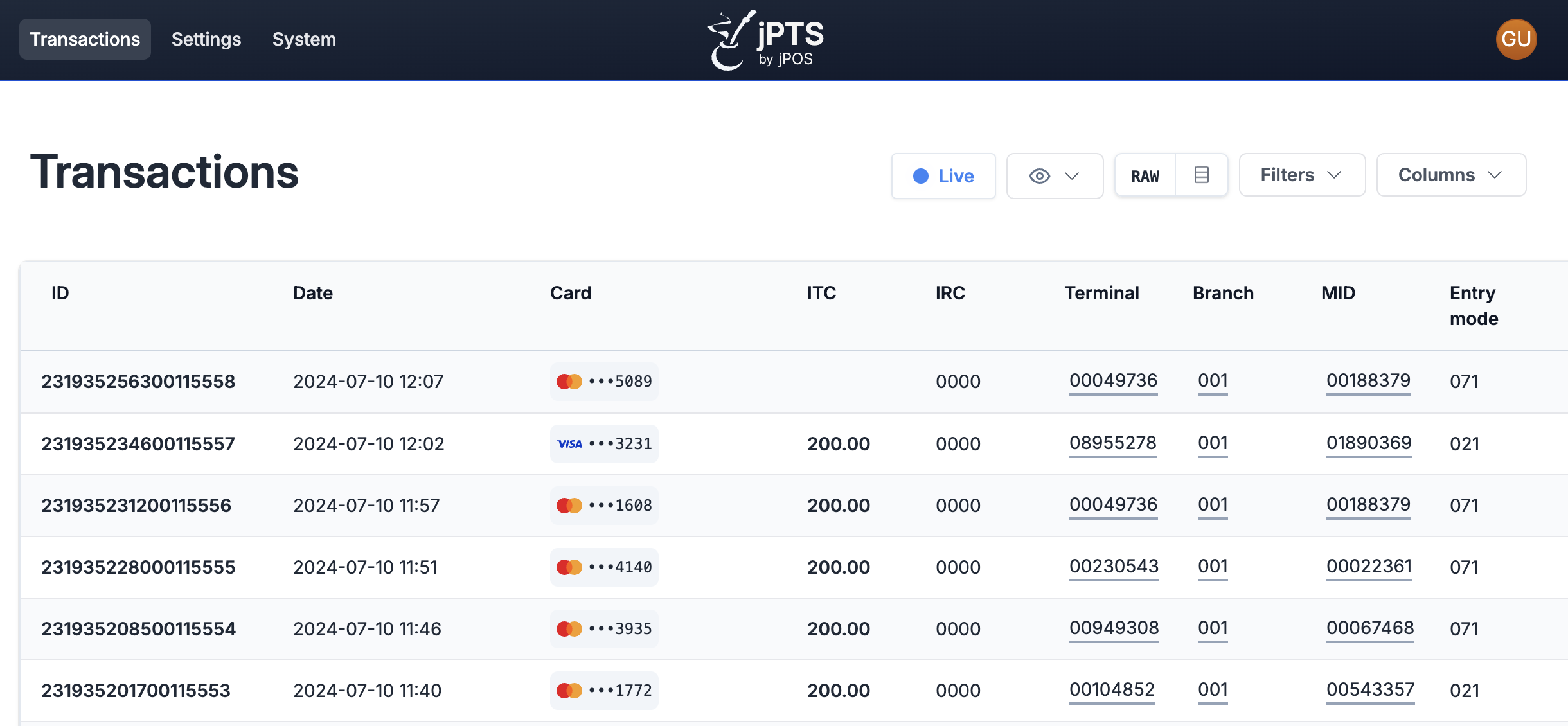
Production-grade building blocks for payment systems.
Composable components for message routing and transaction orchestration.
Self-serve when you can, bring in the core team when you need to.
The protocol coverage institutions need for interoperability across rails.
This is what jPOS looks like.
A few lines of Java to parse and answer an ISO-8583 message, and a small XML descriptor that Q2 hot-deploys as a production channel. No code generation, no vendor console.
- ISO-8583 in Java
- Deploy with Q2
// Parse an inbound ISO-8583 authorization request
ISOMsg m = new ISOMsg();
m.setPackager(new ISO87APackager());
m.unpack(request);

// Approve it
m.setResponseMTI();
m.set(39, "00");
byte[] response = m.pack();
<!-- deploy/10_channel.xml — drop it in, Q2 hot-deploys it -->
<channel-adaptor name="acquirer-link"
    class="org.jpos.q2.iso.ChannelAdaptor" logger="Q2">
  <channel class="org.jpos.iso.channel.NACChannel"
           packager="org.jpos.iso.packager.ISO87APackager">
    <property name="host" value="192.168.1.1" />
    <property name="port" value="7001" />
  </channel>
  <in>acquirer-send</in>
  <out>acquirer-receive</out>
  <reconnect-delay>10000</reconnect-delay>
</channel-adaptor>
Different paths, one payment-grade core.
Whether you are evaluating the framework, learning its moving parts, or planning a commercial deployment, pick the path that gets you there fastest.
Start Building
Explore the open-source stack, transaction manager, packagers, channels, and the practical path to your first message flow.
Open the docsLearn jPOS
Go from framework basics to production patterns with tutorials, guides, and the institutional knowledge behind the project.
Follow the tutorialSecret Source
Bring in the core team for commercial licensing, advanced modules, architecture guidance, and production support.
Explore enterprise optionsBuilt for institutions that care about the details of the wire.
The value proposition is not “another Java toolkit.” It is a battle-tested set of primitives for payment systems where message semantics, processing flow, and operational visibility need to stay under your control.
See the framework overviewPayment Standards
Built around ISO-8583, ISO-20022, EMV, and ANS X9.24 for institutions that need interoperability, not abstractions.
Operationally Proven
Designed for gateways, acquirers, issuers, and switches where transaction integrity, visibility, and throughput matter.
Composable Core
Use Q2, TransactionManager, channels, MUXes, and packagers as a toolkit instead of buying into a rigid platform.
From zero to a working system in three steps.
Everything is open source: set up a local environment, run the components, and build a real message flow the same day.
Understand the landscape
Start with the overview of jPOS projects and how the open-source and enterprise pieces fit together.
Open sectionSet up a working environment
Use the tutorial track to get a local setup, understand the directory structure, and run your first components.
Open sectionImplement a real flow
Jump into the tutorials for channels, transaction manager, packagers, QMUX, and related building blocks.
Open sectionWhat the project has been shipping.
Releases, engineering notes, and announcements from the jPOS team.
jPOS and jPOS-EE 3.0.2 Released
Security fixes, structured transaction logging and tracing, richer ISO 8583:2023 support, and database and QRest reliability improvements in jPOS and jPOS-EE 3.0.2.
Read updateSeptember 23, 2026Flexible Fees, Governed Changes
How jCard combines expressive fee formulas, four-eyes certification, and per-fee ledger attribution without putting pricing policy inside application code.
Read updateSeptember 11, 2026Bulk Card Issuance as a Managed Job
Durable progress and recovery for bulk card issuance, and the next step toward independent Kubernetes workers.
Read updateBring the core team into the room.
When you need architecture guidance, premium modules, or support for a production rollout, the commercial side of the ecosystem is part of the story.